Home / Articles
Traditional Korean Medicine Techniques to Relieve TMJ Pain – No Surgery Needed
Home / Articles
Traditional Korean Medicine Techniques to Relieve TMJ Pain – No Surgery Needed
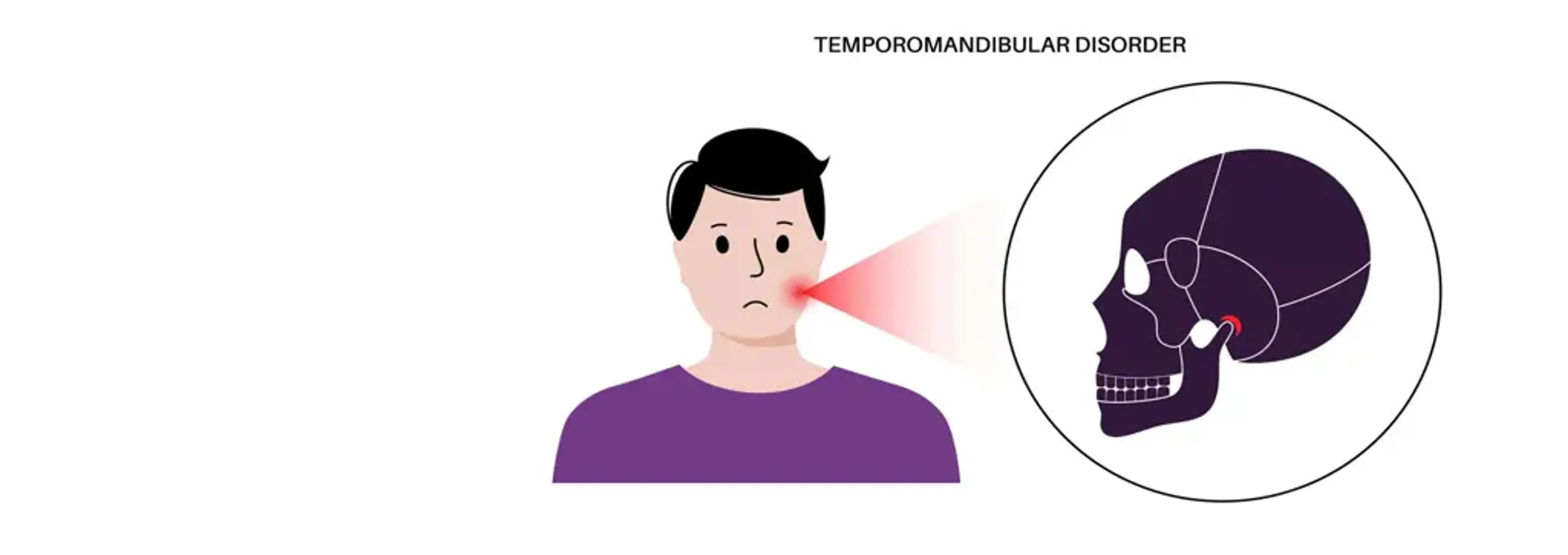
The TMJ is one of the most complex joints in the body. It must hinge, slide, rotate, and coordinate with the neck, shoulders, and skull all at once. When it becomes dysfunctional, patients often experience:
Jaw pain or stiffness
Clicking or popping sounds
Headaches or migraines
Ear pressure or tinnitus
Facial asymmetry
Neck or shoulder tightness
Difficulty chewing or speaking
In our clinic, we frequently see TMJ disorders linked to:
Forward head posture (common in office workers and students)
Cervical misalignment causing nerve irritation
Uneven shoulders due to long-term stress patterns
Tightness in the masseter, temporalis, or pterygoid muscles
Clenching or grinding (bruxism), often stress-related
Scoliosis or pelvic imbalance affecting the entire kinetic chain
You can imagine the TMJ like the door hinge of a house—if the foundation is tilted, the door won’t close smoothly. In the same way, when your cervical spine or posture is compromised, the jaw is forced to compensate. Over time, this compensation leads to inflammation, muscle fatigue, and pain.
Traditional Korean Medicine offers a gentler, more holistic approach that:
Reduces inflammation
Relaxes overactive muscles
Corrects misalignment
Restores natural jaw mobility
Addresses whole-body imbalances
This is why Korea has a long tradition of treating TMJ disorders without surgery, relying on precise touch, structural correction, and individualized care to promote real healing.
Below are the primary TKM-based methods used at Banpo Newborn Korean Medicine Clinic. These techniques have helped countless patients find relief—often after years of failed treatments elsewhere.
Releases tension in the masseter and temporalis muscles
Realigns the mandibular joint for smoother opening and closing
Improves cervical spine alignment (critical for jaw balance)
Reduces nerve irritation and inflammation
One of our patients, a violinist in her 30s, came to us after dealing with jaw locking for years. She assumed it was due solely to playing her instrument, but her cervical spine showed significant forward tilt. After several Chuna sessions focused on both jaw and neck alignment, she experienced dramatic improvement—her jaw stopped locking, and her headaches disappeared. She told us it was the first time in years she felt like herself again.
Acupuncture is highly effective for TMJ disorders, especially when the symptoms include:
Sharp pain while chewing
Tension headaches
Facial asymmetry
Bruxism or stress-related clenching
TMJ pain often arises from overstimulation of the trigeminal nerve, which controls facial muscles and sensation. Acupuncture helps:
Reduce nerve hypersensitivity
Release deep muscular tension
Improve circulation to the jaw
Calm the autonomic nervous system
Some patients feel relief in just a few sessions as tight muscles “unlock” and the jaw begins moving more freely.
Herbal formulas in Korean medicine are tailored to each patient. TMJ-related prescriptions may target:
Inflammation
Muscle tension
Stress and sleep issues
Blood circulation
Digestive imbalances affecting the Stomach meridian
For example, formulas that improve circulation are especially helpful for patients whose TMJ pain worsens under stress or appears alongside headaches. Others need herbs that calm the mind and reduce nighttime clenching.
The key is personalization—just as no two bodies are the same, no two TMJ cases are identical.
TMJ disorders often involve stubborn muscle knots in the jaw, neck, and upper back. Heat therapy and moxibustion help:
Relax contracted muscles
Increase blood flow
Reduce stiffness
Support the healing of irritated joints
At Banpo Newborn, we often pair gentle moxibustion with Chuna therapy for patients with chronic TMJ tension or cold-type stagnation. Many describe the sensation as “melting away” years of tightness they didn’t realize they were holding.
Misalignment in the atlas (C1) affects the entire cranial structure
Forward head posture strains the jaw and neck muscles
Pelvic imbalance creates asymmetry that travels upward
Uneven shoulder height influences chewing patterns
When the spine’s “foundation” is corrected, the jaw can finally return to its natural position without overcompensating.
Non-surgical and gentle
Uses spatial analysis to identify micro-misalignments
Tailored to the patient’s posture, gait, and facial symmetry
Creates long-term stability rather than temporary relief
Patients often tell us that after SART, their jaw no longer clicks, their face appears more symmetrical, and their chronic neck tension dissolves—results that other treatments never achieved.
The muscles inside and around the jaw are small but incredibly powerful. When they become stiff or overworked, they can cause significant pain.
Our clinic’s myofascial release techniques target:
The masseter (the strongest muscle in the body relative to size)
The temporalis
The medial and lateral pterygoids
Suboccipital muscles that influence jaw mechanics
Unlike standard massage, TKM myofascial work follows meridian pathways and fascial lines, allowing the jaw to regain smooth movement.
Patients often say, “I didn’t realize how tight that area was until it released.”
Traditional Korean Medicine is especially beneficial if:
Your jaw clicks, pops, or shifts while chewing
You have headaches or neck pain along with jaw discomfort
Stress worsens your symptoms
You feel jaw tightness upon waking
You prefer avoiding surgery or long-term medication
You’ve tried other treatments with limited success
Because TKM addresses the root cause—not just the symptoms—many patients experience relief that lasts far beyond the treatment period.
Even the best treatments work more effectively when paired with mindful habits. Here are some practical recommendations we often share:
Overworking the jaw delays healing.
Perform only under professional guidance to avoid worsening the condition.
Helps relax tight muscles and reduce nighttime clenching.
Mouth breathing destabilizes the jaw and changes tongue posture.
These small changes make a meaningful difference, especially when combined with treatment.
TMJ disorders are complex, but healing is absolutely possible. At Banpo Newborn Korean Medicine Clinic in Seoul, we take a multi-dimensional approach that integrates:
Traditional Korean medicine wisdom
Modern biomechanical assessment
Personalized, one-on-one care
Non-invasive spinal and TMJ correction
Long-term rehabilitation strategies
For many, addressing the jaw becomes a turning point in restoring overall health: better sleep, fewer headaches, improved posture, and a calmer mind.
If you’ve been living with TMJ pain and feel stuck, please know: you are not alone, and you don’t need to endure this indefinitely. Your body has remarkable potential to heal when given the right support.
Banpo Newborn Korean Medicine Clinic offers comprehensive TMJ assessments that examine:
Jaw movement
Facial symmetry
Cervical and spinal alignment
Muscle tension patterns
Lifestyle and stress factors
This holistic evaluation allows us to build a treatment plan tailored precisely to your needs—gentle, non-surgical, and focused on long-term results.
If you're ready to explore a natural, effective way to relieve TMJ pain, we would be honored to guide you on your healing journey.