Home / Articles
Why TMJ Pain Is Becoming More Common in Teenagers
Home / Articles
Why TMJ Pain Is Becoming More Common in Teenagers
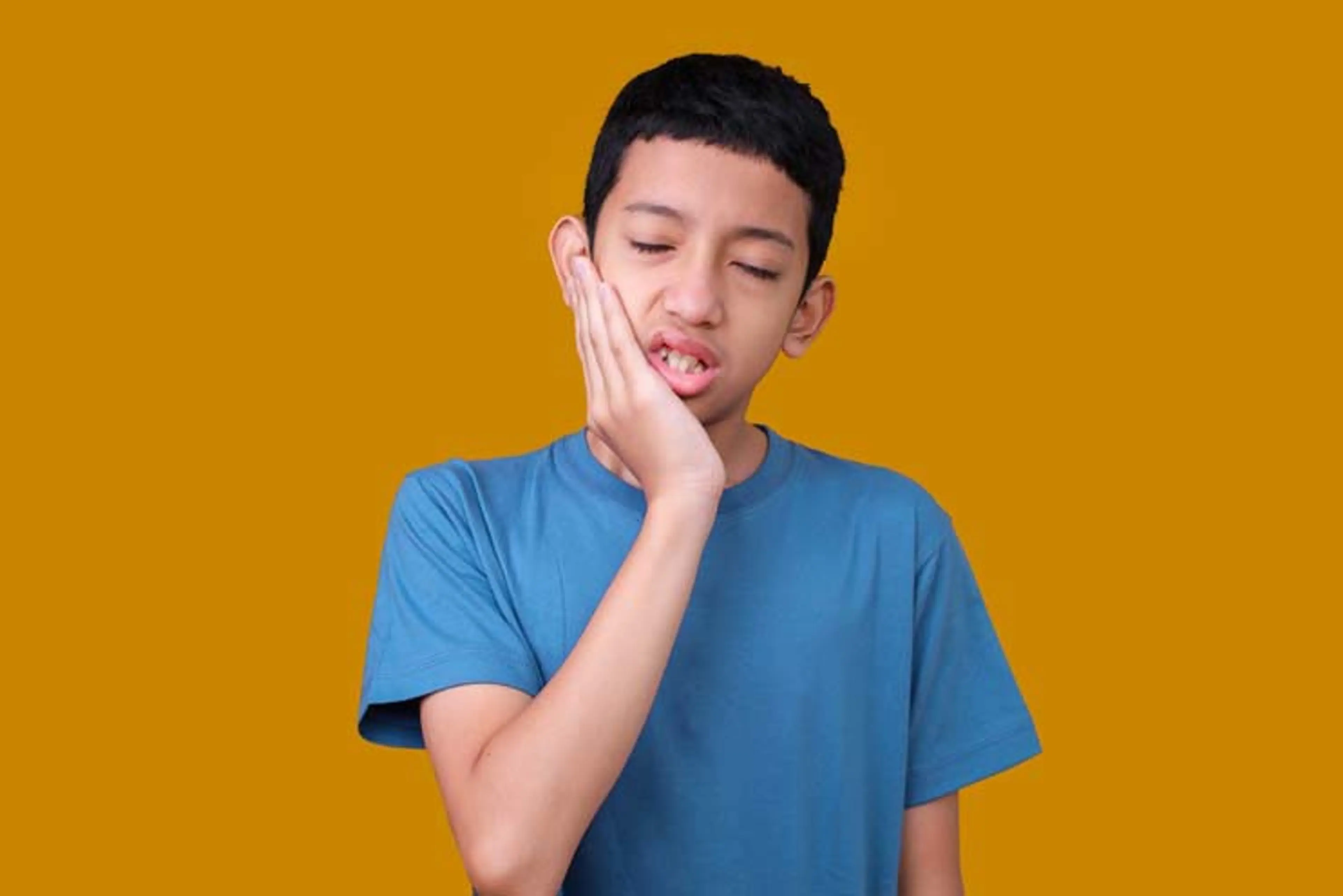
It’s surprising at first. TMJ disorders used to be something we associated mostly with adults over 30—people who had years of accumulated stress, dental wear, or postural strain. But today, it’s not uncommon for us to meet middle-school or high-school students who struggle to open their mouth comfortably, who report jaw tightness during meals, or who wake up with unexplained facial discomfort. Some come in complaining of chronic headaches or neck stiffness, only to learn that the root cause sits right in the jaw joint.
To be honest, many parents are shocked to hear it. Still, when we look closely at the everyday environments and emotional burdens teenagers now live with, the rise of TMJ pain becomes clearer—and deeply concerning.
Korea’s education system is globally admired, but it comes with intense competition. Many teenagers study late into the night, attend multiple after-school academies, and rarely experience mental downtime. What we see clinically is that prolonged academic stress creates a state of chronic sympathetic activation—the “fight or flight” mode in the nervous system.
When this stress becomes habitual:
The jaw muscles stiffen.
The shoulders rise toward the ears.
The neck loses its natural curvature.
The body begins to rely on muscular tension as a coping mechanism.
Over time, this tension overloads the TMJ.
Beyond academics, teenagers today navigate a digital environment that constantly demands comparison, presentation, and social validation. This results in subtle but persistent emotional stress, which often shows up physically—especially in the jaw and facial muscles.
It’s not uncommon for teens to report:
Jaw tightness during anxiety
Clenching when concentrating
Teeth grinding during sleep after emotionally overstimulating days
Stress is no longer an adult problem; it’s universal—and younger bodies are paying the price.
Smartphones, tablets, laptops—these devices place the neck in a constant forward-tilted position. When the head moves even a few centimeters ahead of the shoulders, the body compensates by tightening supporting muscles around the jaw, neck, and temples.
Teenagers commonly show:
Forward-head posture
Rounded shoulders
Weak deep cervical flexors
Chronic neck stiffness
Because the TMJ, neck, and upper cervical spine form a single functional unit, misalignment in one area directly affects the others. Dr. Ungjin Im often explains it to parents this way:
During adolescence, bone growth is still active. When posture is chronically misaligned, it can influence:
Mandibular position
Bite alignment
Facial asymmetry
Jaw muscle adaptation
We have seen a noticeable increase in teenagers developing asymmetric jaw function—often accompanied by popping sounds (crepitus) when opening their mouth. This wasn’t nearly as common two or three decades ago.
Beyond posture, modern device use creates repetitive habits that overload the jaw muscles in subtle ways.
Many teens clench their teeth unconsciously when focusing intensely. The more immersive the task—gaming, competitive online study platforms, design apps—the more likely they are to clench.
One teen patient told us he clenches hardest when he’s about to win a game. He never realized that those moments were enough to create chronic jaw fatigue.
Frequent consumption of:
Gum
Chewy snacks
Hard candies
Ice
places repetitive mechanical stress on the TMJ. The growing availability of high-chew processed foods contributes to jaw overuse in a way that older generations didn’t encounter daily.
Teenagers with nasal congestion or allergic rhinitis (very common in Korea) tend to mouth-breathe, which weakens jaw stability. Chronic mouth-breathing can affect tongue posture and encourage improper jaw positioning, increasing TMJ strain.
Sleep quality in adolescents has worsened significantly due to:
Excessive screen time before bed
Irregular sleep schedules
Academic stress
Blue light exposure
Emotional overstimulation
Sleep deprivation amplifies tension in the body—and bruxism (teeth grinding) is one of the first signs. Grinding at night places enormous pressure on the TMJ, often exceeding what the joint experiences during waking hours.
Teenagers who present with morning headaches or jaw soreness often fall into this category. Unfortunately, many parents assume nighttime grinding is harmless or temporary, when in fact it can reshape the jaw mechanics and cause long-term dysfunction if untreated.
Not because orthodontics is harmful—far from it—but because:
The TMJ is not always evaluated during treatment planning.
Bite changes may not account for existing muscular imbalances.
Rapid dental adjustments can stress an already unstable jaw joint.
In some cases, teenagers already have mild TMJ dysfunction due to posture or stress, and orthodontic changes amplify the problem.
At Banpo Newborn, we often collaborate with dentists and orthodontists to support these patients through Korean medicine techniques that stabilize the jaw, relax the muscles, and support proper alignment.
During puberty, teens undergo rapid growth spurts that affect:
Facial bones
Cervical spine curvature
Muscular distribution
Bite development
When the spine or jaw grows unevenly—and stress, posture, or lifestyle habits compound these imbalances—the TMJ becomes highly vulnerable. This is why early intervention is so crucial.
One parent from Banpo recently said something that resonated deeply:
Growth can amplify dysfunction—but it can also make treatment more effective when addressed early.
In Korean medicine, the jaw is not an isolated structure. It is intimately connected with:
Cervical alignment
Shoulder tension
Stress pathways in the body
Postural imbalances
Digestive and respiratory function
We see TMJ disorders as a whole-body condition rather than a localized problem. When teenagers come to us with jaw pain, we evaluate:
Spinal symmetry
Pelvic balance
Breathing patterns
Emotional stress load
Lifestyle habits
Sleep quality
This holistic foundation is why our treatments often succeed where isolated approaches fall short.
With over 30 years of experience in musculoskeletal care, our clinic uses gentle, non-invasive methods to realign the jaw and calm the surrounding structures.
Key approaches include:
Dr. Im’s spatial spinal correction restores the natural 3-dimensional alignment of the spine. When the neck and upper back regain balance, the TMJ often improves dramatically.
This technique corrects deep postural imbalances and relieves tension patterns that silently overload the jaw.
Chuna is especially effective for:
Reducing muscle tension around the jaw
Improving neck mobility
Correcting asymmetrical use patterns
Many teens feel relief after their very first session.
Gentle intraoral and extraoral techniques help realign the joint, improve disc movement, and restore smooth mechanics.
Customized herbal formulas can:
Reduce clenching
Improve sleep quality
Calm the nervous system
Teenage patients often report that they feel more mentally balanced in addition to experiencing less pain.
Prevention is not just possible—it is far easier than treating advanced TMJ dysfunction.
We commonly recommend:
Keeping screens at eye level
Taking posture breaks every 30–40 minutes
Avoiding hard or chewy foods during jaw discomfort
Practicing gentle jaw relaxation exercises
Encouraging nasal breathing
Improving sleep hygiene
Managing stress with balanced schedules and downtime
Parents are often relieved to learn that simple lifestyle shifts can dramatically reduce symptoms.
TMJ pain in teenagers is not a passing trend—it is a reflection of how drastically modern life has changed. Stress, screens, posture, orthodontics, and sleep habits are all shaping the musculoskeletal health of our youth in unprecedented ways.
If your teenager has jaw clicking, facial tension, headaches, or unexplained neck stiffness, early evaluation is one of the greatest gifts you can give them. Many of the adult patients we treat today tell us they wish someone had noticed these signs when they were younger.
At Banpo Newborn Korean Medicine Clinic, we believe that each teenager deserves a balanced, comfortable, and pain-free foundation for adulthood. With thoughtful care, precise correction, and a warm, patient-centered approach, healing is not only possible—it’s within reach.